Categories
#6 cún 存 Cháng Dào dì 帝 Fú 夫 lâo 老 mián 綿 ruò 若 Tiān Xuán xī 希

someone compliantly combing their loose hair seems to be saying: ‘this is as if…’

ruò (若)

Within that valley mouth between two mountains,

a lightning god…

the husk of the initial protective bud casing—the sepal—but not really the true inner flower of

being mortal—going from a standing person to a pile of bones;

the sun—walking across the sundial a while, stopping a while—sees indeed

what it’s called when speaking from the gut—words, like slaves or criminals branded by a chisel emerging from a mouth,

the hard-to-see dark structure—like a figure-eight skein of string-dyed-black:

a mother’s lap—a cow with an arrow… a vagina.

“Hard-to-see dark structure—like a figure-eight skein of string-dyed-black,

a mother’s lap—a cow with an arrow… a vagina,

has this

double-winged gateway… “[from Chapter 1]

the sun—walking across the sundial a while, stopping a while—sees indeed

what it’s called when speaking from the gut—words, like slaves or criminals branded by a chisel emerging from a mouth:

Heaven (that sky level above the human head)-Earth (this soil vagina)…

root of the family tree—penis…

barely perceptible—like the fine, white silk threads making up that ever-present, timeless, whole head-cloth ‘ji’ our grown men wrap around the ‘little bird’ top knots on their heads once they’ve received their adult, public courtesy-names.

Barely perceptible—like the fine, white silk threads making up that ever-present, timeless, whole head-cloth ‘ji’ our grown men wrap around the ‘little bird’ top knots on their heads once they’ve received their adult, public courtesy-names…

someone compliantly combing their loose hair seems to be saying: ‘this is as if…’ (ruò, 若)

surviving—on the plane of a baby with health issues, maybe a large head, but still sprouting… (cún,存)

doing truly useful work like a water bucket—by means of carrying-capacity

has this…

the husk of the initial protective bud casing, but not really the true inner flower, of

exerting with force—working hard with the strength of an arm, a bladed tool, or a plough on the soil.

That’s all of Chapter 6 in its entirety. It’s a pivotal chapter because here we meet a new character, ruò, 若. Its bronze inscription character is a pictogram of a person combing their hair:

Its modern translations are to be obedient or compliant, to trim vegetables, to choose, you/yours, he/his, like, as if, and supposing. Dào translators usually interpret it as is like, seems, or as. Or they just ignore it altogether or use “is” in its place. In two key places in Chapter 37, the final chapter of the Dào part of the Dào Dé Jīng, they almost universally translate it as “if.” As is my custom, I incorporate the modern meanings, the pictogram, and the traditional translations into one consistent translation every where it occurs:

someone compliantly combing their loose hair seems to be saying: ‘this is as if…’

Since there are other, more specific, ways to say each of the traditional meanings (if, like), I think this character has some particular use for Lâozî.

~

It’s interesting that ruò so prominently features hair since that’s a recurring motif… beginning with The Way itself. In the character for Dào, the head very obviously has a head of big loose hair.

And in Chapter 1, right away we’re struck by how that seems to very obviously differ from the conventional hairstyle of a grown man with a top knot (, 夫) and especially from a grown man whose top knot’s covered by a traditional head cloth. This head cloth image occurs not only in that word for the timeless, never-changing traditional version of things (cháng, 常) but also in the characters showing God in Heaven or emperor (, 帝, as we saw in Chapter 4), barely perceptible (mián, 綿, as we see in this chapter), and sparse (, 希).

Hair style appears in many other characters including, not least of all, lâo, 老: an old man with long hair and a cane. This word is the first part of Lâo Zî’s honorific name.

~

It’s fascinating to me that this character ruò first appears in this particular place in our story. In Joseph Campbell’s classic Hero’s Journey story arc, this is the place where the hero would get outside help, usually from a supernatural, larger-than-life, or unexpected source.

In the last chapter, there was the doubtful sentiment of “pah, can you?!” The call to the daunting adventure of living according to The Way of the Loose-Haired Chieftain seemed rather undoable. But now we have someone compliantly combing their loose hair who seems to be saying: ‘this is as if’ surviving—on the plane of a baby with health issues, maybe a large head, but still sprouting.

Chapter 4 introduced the possibility of surviving. But here, our magic someone not only rather drolly says that’s what’s happening but elaborates what this means: the doing of truly useful work (like a water bucket) has this: non-exertion.

OHHHHH. Doing useful work like a water bucket without overflowing (while pouring water our from the center hollow drum!) was the calling for The Way at the beginning of Chapter 4.

So what does Chapter 6 tell us?

  • Here’s the situation: The lightning god within that valley mouth between two mountains isn’t really turning into a pile of bones. Phew.
  • The sun sees indeed what it’s truly called, that hard-to-see dark structure—like a figure-eight skein of string dyed black:a mother’s lap/vagina…
  • and the “hard-to-see dark structure, a mother’s lap/vagina’s double-winged gateway” (remember that phrase dramatically ending Chapter 1?) is truly called… Heaven-Earth… root-of-the-family-tree or penis…
  • barely perceptible. Mián, 綿, or “barely perceptible” is drawn by showing the fine, white silk threads making up that ever-present, timeless, whole head-cloth ‘ji’ that grown men wrap around the ‘little bird’ top knots on their heads once they’ve received their adult, public courtesy-names. The modern translation of this word is soft, downy, or sometimes cotton. Dào translators variously call it continuously, always present, like a veil, lingering like gossamer, or invisible.

As usual, the lack of punctuation and various potential syntaxes make those first five lines interpretable in many ways. Also as usual, I interpret it based on how the drawings and double-meanings make something occur to me. What with all the pregnancy and baby images, I’m starting to think that Heaven (tiān, that sky level above the human head)-Earth (dì, this soil vagina) refers to a spirit from above when it is down here, manifest, in the womb. In other words a fetus.

In the Western Zhou bronze inscription age just preceding Lâozî’s era, tiān was drawn as a person with a large head:

In the even older Shang oracle bone script, it was drawn with a line above a person’s head, supposedly indicating a higher level:

It is thought that the oldest meaning was sky. It’s also been used to mean heavens, celestial, heaven as a place for deities or departed souls, heaven as a deity, overhead, top, climate, a 24-hour day, daytime, season, nature, natural, innate.

So is my interpretation far-reaching? Maybe. But when I re-read everywhere this phrase occurs, it totally can fit this secondary-level interpretation at the same time that it fits into a meta- or symbolic story about “Heaven on Earth” or “Heaven and Earth.” In this use of it, I see someone literally trying to figure out what’s going on inside a laboring uterus and barely being able to discern the fetus. Maybe they can tell it’s a boy? Or maybe they know that after the fact. Or maybe the vagina’s product is called the family root, attributed to the work of a penis. Okay back to what we see for sure…

  • Even though it’s barely perceptible, our magically helpful someone, compliantly combing their loose hair, seems to be saying: ‘this is as if’ it’s surviving —on the plane of a baby with health issues, maybe a large head, but still sprouting. Now you can see how, based on my imagination and the previous and following chapters, I like to think of our someone as a midwife helping with premature labor.
  • And given this situation, she says that surviving means doing truly useful work like a water bucket, by means of carrying capacity, has this “not really exerting with force.” I see that as “the most useful work now is just to carry that baby. Don’t labor. Especially don’t push.”

There you go… I’ve fully bared my most wild, favorite theory. And you can understand my admiration for Lâozî, given that this story is buried within characters that ALSO can be translated as a cosmic, existential, life handbook. Here’s how Yi Wu translates this chapter:

The spirit of the valley never dies;
It is called the mysterious female.
The gate of the mysterious female is called the root of Heaven and Earth.
Continuously it seems to exist.
There is no labour in its use.

And here’s how Feng and English translated it:

The valley spirit never dies;
It is the woman, primal mother.
Her gateway is the root of heaven and Earth.
It is like a veil barely seen.
Use it; it will never fail.

Thomas Cleary translates it as:

The valley spirit not dying is called the mysterious female.
The opening of the mysterious female is called the root of heaven and earth.
Continuous, on the brink of existence, to put in into practice, don’t try to force it.

Is this non-forcing possible? Sometimes—whether because you’re in actual labor or you’ve found yourself in the habit of over-efforting in life and not relying on the “female” type of creativity—it doesn’t seem like it. Can our magical someone help in ways more tangible than just saying “don’t labor; don’t force it?”

We’ll find out next time. And now, until then, please use the contact form to send me your responses to my theory! I hope you’ll go back and re-read all the chapters we’ve looked at thus far and see how my ideas do or don’t make sense to you. Thanks for being here.
Categories
#3 Cháng Mín 民 Qí 其 Wú 無 Yôu zhì 治

civilians—like the Mín people enslaved by blinding with a dagger—

Mín

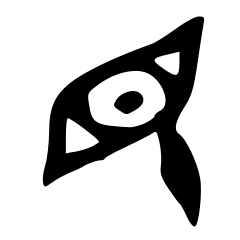
An eye pierced by a dagger. That’s the pictogram for today’s word, 民, which is modernly translated as people, citizens, folk, popular, and civilian.

Wow. This is why the images within the characters matter to me. The above picture of an eye and dagger is what Lâozî most likely would have drawn while writing down the 37 chapters we now call The Dào. Eye-piercing was an historic method for enslaving people. I’ve read that this practice was associated with enslaving the Mín people, hence this word and their name. Words from the Mín dialect make their way into the Dào in several places that I’ll note as we go along. We saw our first one in the last post, and—possibly not coincidentally?— that word (shî) occurs directly before today’s word (Mín) the first four times we see either one used.

As you recall, Chapter 3 opens with a list of three attitudes to avoid. If you avoid these, then you have a populace that doesn’t do three corresponding bad things. –>Not really elevating the elite rich means people don’t really compete (like with two hands clawing over a plow). –>Not really treasuring hard-earned transformation of riches means people don’t really “effort” thievery. –>And not really seeing something as definitely wanting or missing means peoples’ hearts aren’t really in a confused anxiety where their tongues are like twisted threads with one remnant string hanging out.

But, to be specific, each of those three prohibitions is spelled out according to this formula:

Not really doing [fill in the blank]

is breeding (like a gentleman holding a fountain pen)

civilians (like the Mín people enslaved by blinding with a dagger)

who don’t really do [fill in the blank].

I found this to be a nice time to re-read our last post and really reflect on that image of a government official holding in his hand a “fountain pen” that resembles “a flagpole sticking out of a drum.” Remember too: this image possibly shows that tool superimposed over a mouth. And of course there was the charming information that its meaning—to make someone do something—means to f*@# in the Mín dialect. So is it just me or does it sound like “breeding civilians” is another way of saying f*@#-ing the lowly masses who were enslaved by blinding their eyes with a dagger.

Does my heart suddenly seem rather dark to you?! Okay before I get all carried away seeing something horrible where it doesn’t exist, let’s find out what happens in the rest of the chapter and how these two words (shî mín) are used there. After all, this chapter is actually the only place that this shî character’s used at all.

~

What immediately follows is another instance of Lâozî telling us the suns sees indeed that this means something about the grounded sage. In this case, that description of what breeds civilians to be a certain way means the grounded sage has a particular style for governing (zhì, ).

If you look at this modern character for zhì, you see it has two sub-components. The left side evolved from the pictogram from water:

The right-hand sub-character (台), when it’s by itself, is pronounced in Mandarin and was the original form of the word for happy or pleased. It depicts a mouth (the square) below another character. Most often that arrangement of a mouth means speaking about though sometimes it actually does seem to carry the meaning of a mouth, a cave, or a similar type opening.

In this case the mouth is drawn below a character that’s sometimes thought to be a plow or a symbol for turned or revolving. More often, and more specifically, it’s thought to be a variation of (以) which we investigated in a previous post. There I translated it as already… finishing it in the womb based on its typical translations and the original pictogram which is said to be either a snake or a fetus. Nowadays, when this character’s combined with the mouth character to make , it seems to refer to some aspect of talking about oneself. The result’s translated as I or me or sometimes as what. It no longer carries the original meaning of happy/pleased, harmony, or joy unless it’s combined with a character showing a heart to the left of it: 怡.

When that same happy character was combined with the pictogram of water to form , the resulting meaning was often an ancient river name (pronounced either and chí). In modern usage, though, it’s pronounced zhî and translated as to govern, regulate, or administer. Historically it was used to describe a seat of local government. Dáo translators generally prefer the terms govern, governing, and government, but sometimes you’ll also see them translate it as rules or leads. Here’s how I translate it to include all the imagery:

governing—regulating by harnessing the river named Happy or speaking of turning yourself

I know it gets kind of wild when I translate this way, but I do so love the results. I love how it associates harnessing the River Happy with regulating or turning yourself around…. and with governing.

UPDATE: I look into this character a little more in a later post here.

~

So, to continue on, Lâozî says that in light of that list of what kinds of attitudes do or don’t breed what kinds of civilians, a sage’s governing looks like this:

The sun—walking across the sundial a while, stopping a while—sees indeed

this means…

the grounded sage—listening and speaking, standing connected to earth as well as the heavens,

that person

has this

governing—regulating by harnessing the river named Happy or speaking of turning yourself:

~ emptying—like lifted land…

what it holds a basket of…

heart-core

~ really filling—like a building with strings of solid cowry-like riches…

what it holds a basket of…

inside—the gut, the meat belly;

~ being as fragile as a matching pair of decorative bows or little wings…

what it holds a basket of…

having heart-core determination and aspiration

~ strengthening like an insect—turning yourself as a venomous snake-like bow…

what it holds a basket of…

that bony will that comes from a skeleton framework.

What “it” is referred to in the phrase “what it holds a basket of?” This character, (其) puzzles me. We first looked at this little connecting word back in one of our earliest posts. But when translating Chapter 3, I decided to go back and review all 61 times it occurs in the first 37 chapters of the Dào Dé Jīng and compare how it’s handled by different translators (especially Chinese translators). I ultimately decided it’s safe to say that this phrase doesn’t necessarily refer back to the word right in front of it. Rather it points the reader back to the most recent “subject.”

In other words, Lâozî probably isn’t saying that “emptying has heart-core.” More likely this phrase says that the sage’s governing empties the sage’s heart-core, fills the sage’s inside/gut, is fragile in the sage’s heart-core determination, and strengthens the sage’s bony will. However only Chia-Hsu Chen translates it this way.

Most translators say the sage’s govern empties the people’s hearts, fills their bellies, weakens their ambition, and strengthens their will. They think “it” refers back to Lâozî’s previous “paragraph.” Other translators leave out the whole question of whose basket is in question! They say the sage’s governing empties the heart, fills the belly, weakens ambition, strengthens will.

What bothers me is that these approaches aren’t consistent in how they decide what the connecting word is pointing to. And when you read the different options I pose here, this subtlety really makes a difference, doesn’t it? Maybe this is another example of Lâozî the poet being intentionally ambiguous. Maybe “it” could be any of those things. “It” could be the sage, the governing itself, the people, or it could even be the word right in front of “it.” Maybe it COULD mean “emptying has heart.” (I like that last version a lot. I translated it that way myself until I more thoroughly analyzed .)

So why do I belabor this?

Because it makes a difference on a very important point: does the sage’s way of governing have anything to do with making the civilians be a certain way? It’s easy to assume so. After all we usually do think of governing as controlling others. And in the first part of this chapter, we just saw some gentleman a fountain pen was making them do stuff. But it seems to me that the point of this next section here is that the sage doesn’t do that. Maybe the sage is just over here minding the sage’s own heart, gut, ambition, and will. The very particular way that Lâozî drew the “governing” character could support that—governing could be about turning yourself, harnessing your own Happy river.

Let’s see where else Lâozî goes with these topics in this chapter. It’s pretty interesting.

~

As you remember, in the very first sentence of Chapter 1, Lâozî set up a conflict between the definitive “” version of things and the cháng version—the ever-present traditional, timeless, constant version of things as symbolized by the head cloth that men donned upon becoming official adults. Now we learn more about the cháng (常) version. We’re going to learn about what happens with that traditional version of breeding civilians:

The ever-present square fabric which our grown men wrap around the ‘little bird’ top knots on their heads after receiving their public courtesy-names—what we know as the timeless, whole head-cloth ‘ji’ version of

breeding—like a gentleman holding a fountain pen making something happen—

civilians—like the Mín people enslaved by blinding with a dagger:

~ nothing—no one dancing with long tails flowing from their wrists—nope, never, no way, nowhere, nohow Not-Being…

firing arrows from the mouth—sure;

~ nothing—no one dancing with long tails flowing from their wrists—nope, never, no way, nowhere, nohow Not-Being…

wanting what’s been eroded from this ravine

We know two things about the traditional version of breeding civilians:

  • Not-Being… sure
  • Not-Being… wanting what’s missing

Does this mean the traditional version of breeding civilians breeds civilians that aren’t sure and aren’t wanting or missing anything? OR that in the traditional version of breeding civilians, someone who is a Not-Being is sure and is wanting something that’s missing? It’s our old familiar debate about the nature of the shamanic dancer Not-Being character, , and the meat-holding character we call Being, yôu. Are they people or are they negative and affirmative parties? Does it depend on context? Let’s keep reading with an open mind.

When we do so, we see in the very next sentence Lâozî tells us a third thing about the traditional version of breeding, and this is for sure about this particular man with a hairpin and public courtesy name (). We met this character in Chapter 2. There we learned he was absent and therefore not really leaving. Here we learn that he’s a person who, in the traditional version of breeding, is sure:

breeding—like a gentleman holding a fountain pen making something happen—

that is to say, this particular grown man with a hairpin and public courtesy name…

“firing arrows from the mouth—sure” as the sun, daily

—now this is cooking!—

the husk of the initial protective bud casing—the sepal—but not really the true inner flower of

daring—lightly hitting ears on both sides of the head—

efforting—like lifting up an elephant,

—yes, that too, vagina!

~

All right, all right. Before I continue, I want to address the elephant in the room—and no, I don’t mean the actual elephant we once again see inside the image for “efforting!” I mean that last exclamation and its reference to female genitalia. Is this gratuitous sensationalism on my part? You tell me. I will give you the facts… in our next post. Because this one’s getting soooo long, and I want to tell you about all of Lâozî’s colorful interjections at one time.

Until next time, be sure to use the contact form to send me your questions and comments. Thank you for being here!

Categories
#1 Cháng

the ever-present square fabric which our grown men wrap around the ‘little bird’ top knots on their heads after receiving their public courtesy-names—or what we know as the timeless, whole-cloth ‘jīn’ version of

cháng

Here we have a compound character. What do you get when you combine cháng (尚), a character that meant to revere:

… with a character that depicts jīn (常), the square head cloth that males wore over their hair buns once they achieved full adult status?

Jīn’s own etymological evolution includes the word diào (吊) which uses a pictogram of a “small bird with a dangling tail” to describe the top knot. This bird and a couple others are sub-components in lots of words, as you’ll see in the future. But in the Western Zhou Bronze Inscription of Lâozî’s time, jīn looked like this:

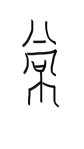
Lâozî combined these two sub-components into a word, also pronounced cháng, that’s written in modern script like this:

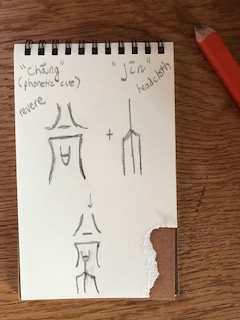
The two sub-characters shown above are in the Western Zhou Bronze Inscription script that I think were most like the script Lâozî would’ve used. But I can’t find an image from those times of the compound character, so… yes, I drew one. That’s what you see at the top of this post!

There are many such cases in the Dào where I can’t find a WZB version of a compound word that Lâozî used. (Of course, you can see how this plays into my theory that our brilliant Lâozî made up all these words a lá Shakespeare!) Hopefully I’ll either find these WZB hybrids somewhere on the internet or figure out how to draw them in a clean digital way at some point soon. Of course I must say that all such efforts are simply my best estimate as to how the two components were combined, based on looking at the modern character. Here’s a peek into my process:

It’s super fun. If you turn your hand to this and come up with something cool, please send it to me.

Meanwhile, what meaning do you imagine when we combine these two sub-characters? The first sub-component here, also called cháng, is considered to be the “phonetic” component that simply gives the compound character its sound. The real meaning—the “semantic” part—is considered to be the bottom component. Modern definitions include: normal,  general, common, constant, and invariable. Indeed, the jīn head cloth was worn by every grown man, so it was a common, constant part of daily life and probably seemed like it had been forever.

Some Dào Dé Jīng translators, like Yi Wu, translate cháng to the simple word constant. But others, including Chen, Feng and English, John C.H. Wu, and Mitchell, think Lâozî meant something even more cosmic. They translate this character in Chapter 1 as eternal. But they also substitute other words in different places, depending on the context: always, constantly, never, abides, forever, and so on. Sometimes they don’t directly include this word but fold it implicitly into how something just “is” or “isn’t” something.

By now, you know I get frustrated when I’m reading a translation and can’t tell if I’m looking at the same word that was used in the paragraph before, the page before, etc. But of course, I understand why it’s done. It’s hard to make just one phrase make sense or even fit grammatically in every context.

And you also know what I’m going to do next: throw in ALL the things! To heck with brevity and certainty! The translation I use everywhere for this character is:

the ever-present square fabric which our grown men wrap around the ‘little bird’ top knots on their heads after receiving their public courtesy-names—or what we know as the timeless, whole-cloth ‘ji’ version of

I like the square shape of the jīn… so pleasing. I love that this word includes fabric which to me relates to the revelation in yesterday’s post that the word xuàn shows us an infinity-loop of black thread! I wonder how else parts of this word will tie into other pictograms and concepts as we move on.

And when I step back and look at this phrase and how it’s normally translated as eternal or constant, I think it gives us a very particular sense that in ancient China, these traditions of becoming, being, and being recognized as an adult man were indeed very timeless, ubiquitous, and solid. And they were revered—which is why I think the “phonetic” component in this word actually contributes a lot to its meaning.

Of course, now when we look back at how cháng‘s used in Chapter 1, it’s even more interesting. But we’ll delve into that more and put it all together after we look at a couple more words in this chapter. Thanks for joining me here once more! I hope you’re settling into the uncertain, floaty feeling of this text and letting it wash over you without having to come to any conclusions. There’s some powerful alchemy at work, I just know it.

TINKERED WITH: 1/15/20, I replaced my paper-drawn composite of the Bronze Inscription components with a digital hand-drawn version.